Monday, June 27, 2005

It's Unanimous!

If you missed the news last week all 166 memeber countries of the World Customs Organization agreed to ratify a new Framework for global supply chain secuity. When was the last time 166 countries agreed on anything? Now the tough work begins. The implementation. Stay tuned.

Here are a few articles on the news:

Financial Times
New York Times

Friday, June 24, 2005

Linking Supplier Diversity to Innovation

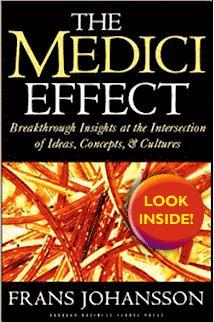
Don't just take my word for it, Frans Johansson wrote an entire book on the subject called "The Medici Effect", which looks at traditional thoughts and processes and sheds new perspectives on how to look at them. For example, many procurement organizations look for ways to squeeze costs from suppliers, instead of looking to them for innovative ideas. It may sound simple enough, but not many organizations are doing it. At IBM, one Native American supplier built a website to help its clients order, replace and recycle shipping pallets, instead of using the phone. Clients such as IBM now have access to real-time inventory and at the click of the button can have the supplier pick up broken pallets and have the recycled. This eliminates the expense of IBM discarding them and it frees up space on the plant floor. That's supplier innovation!

Tuesday, June 21, 2005

Wanted: Historical Supply Chain Quotes

Are you looking for a supply chain related quoted with some sort of historical significance? Well, you've come to the right place. A new feature of this blog will search the blogosphere and the hemisphere, for that matter, in an attempt to build a repository of historical supply chain related quotes. Here is the first one:

"The amateurs discuss tactics: the professionals discuss logistics." - Napoleon
Courtesy of Andrew Brooks, Editor, TransSec Magazine

Monday, June 13, 2005

Milk or Imaginery Arrows: Supply Chains for Digital Media

When most people think of supply chains they link of the movement of physical goods, such as cars, computers, food or clothing. Which is completely accurate, but while supply chains may have grown out of these industries the 21st century requires supply chains to evolve into new areas.

In an earlier post on June 3, I discussed how supply chains can be used to manage employee skills and talent, which is very cutting edge. But what about using a supply chain to manage digital media, such as PDF files, mp3 files, JPEG or TIFF images or the latest movies? Today, many of us participate in very simple digital supply chains when we email photos to our friends and family. But what do you do when you want to send 3,000 photos to 4 million people and make sure that they all pay a fee for the privilege to see the photo for only 30 days?

Similarly to the inventory, logistics and fulfillment processes of a traditional supply chain, digital media is just as complex if not more. For example, in the digital world inventory is limitless. Since digital files can easily be replicated, your inventory is only bound by the size of your harddrive. But this also adds a layer of complexity as content owners need to be concerned with security. I don't think automaker Ford worries too much that its new GT is going to be duplicated in the thousands and sold on the black market, but you can bet that it keeps the movie and music industry up all night. Another major concern for digital supply chains is bandwidth. Just like a 18-wheel truck can get filled, the bandwidth a company uses to disseminate digital files needs to be managed to prevent the system from crashing and halting the data exchange, which could lead to dissatisfied customers.

I recently read about a new trend in video gaming were avid gamers use real money to purchase virtual weapons and clothes for their virtual counterparts. Can you believe it? My mom would have killed me if I used my milk money in grade school to buy a bow and arrow for my Dungeons & Dragons character. But this is reality today and complex supply chain processes will be needed just like they are today in the more traditional industries. The question is how many businesses are ready?

Tuesday, June 07, 2005

The value of supplier diversity

This Friday, the National Gay & Lesbian Chamber of Commerce will host its annual banquet dinner and award Cendant with its Corporation of the Year Award (IBM won in 2004). Winning this award or any award for supplier diversity is significant for a number of reasons.

The value of expanding diversity among a supply chain should be strategic business decision for any business. In IBM's case, diversity dates back to 1900, so it is no wonder that one hundred years later in 2000, IBM was the first IT company to spend $1 billion with diverse owned businesses. But would you believe only 12
U.S. public corporations spend a billion dollars or more with diverse owned businesses? The 12 are called the Billion Dollar Roundtable and also include Altria, AT&T, DaimlerChrysler, Ford, General Motors, Johnson Controls, Lockheed Martin, Lucent, SBC Communications, Verizon and Wal-Mart. And they get it.

Similar to IBM, their commitment to greater diversity is driven by the recognition that the skills and insights needed to meet client needs are as a diverse as the human population. To succeed, corporations should recruit skills not only through employment practices but also through the diversification of the supply chain. IBM currently works with more than 300 businesses that are considered diverse including, women, GLBT, African-American, Latino, Native American and people with disabilities.

It's also good business sense. Small and medium sized businesses, specifically minority owned are growing more than 5 times greater than other groups. This represents a huge market opportunity for IBM to sell hardware, software and services.

Friday, June 03, 2005

It's Official, Labor Supply Chains are a trend according to AMR

The strategy is simple enough, in a growing services based business how can a company efficiently manage the skills and talent of hundreds of thousands of employees and contractors, particularly when every day your employees learn new skills or leaves the company?

This is a new reality and to continue its rapid services revenue growth IBM is taking some of its best practices that it learned as an asset based company and is now applying them to the skills of its employees. In January 2004 IBM launched its Workforce Management Initiative (WMI) to develop a common expertise taxonomy to request, identify, assess and fulfill client resource needs. For example, if a client needs a French and Italian speaking consultant with a PhD in nanotechnology to be in Rome on June 25, WMI can find the best available IBMer or contractor as quickly as your can say Google. The US DOD is doing the exact same thing.

WMI will enable IBM to increase profitability and create a flexible resource pool and allow us to adapt to changing business conditions and market needs in a much more efficient and structured manner. Already well underway, this past year it has reduced the cost of our services business by more than $2.4 billion and has increased the visibility of resource deployment resulting in a 3-5 percent improvement in utilization.

So according to Bruce Richardson, Vice President, AMR Research, he believes this is a one of the seven supply chain trends AMR is tracking and IBM is ahead of the curve.

Check out the AMR Study

Thursday, June 02, 2005

Mark this day if you care about supply chain security

June 23rd is going to mark a watershed event in the supply chain industry. The clever directors at the World Customs Organization are going to ratify a supply chain security framework for the global trade (actually 166 countries, representing 98% of global trade), but who's counting.

The WCO Framework is similar to that of the US constitutional amendments in that its requirements allow for interpretation and flexibility. This is the right approach. Each of the 166 member countries have domestic laws that also have to be considered. Plus, if a requirement required significant funding, some countries cannot afford to comply. So supply chain security is not a one size fits all solution, but this Framework at the very least makes sure everyone is trying on the same garment.

To take a look at the 17 standards go to: WCO Website